Are We Racing the Wrong AI Agent Race Metrics?
Everyone is racing to build faster AI agents. But the panel on this episode of Techstrong Gang asks a sharper question: are the industry’s AI agent race metrics even measuring the right thing? Indeed, speed and benchmark scores dominate the conversation, while reliability, cost, and real-world task completion get far less attention. Host Alan Shimel leads a panel discussion covering three stories shaping enterprise AI and tech policy this week.
Handicapping the AI Agent Race
The panel opens with a hard look at how the industry tracks AI agent race metrics and overall AI agent progress. For example, most public benchmarks reward raw speed and model size. However, few measure whether an agent actually finishes a real task without human intervention. As a result, the panel argues that better AI agent race metrics would track task completion rates and error recovery, not just leaderboard rankings. Therefore, enterprises adopting agents for production workflows need reliability data more than they need another speed record.
AI Pollution and Data Center Air Permits
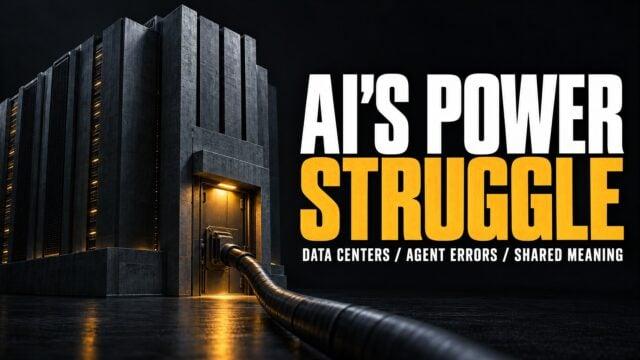
Data center growth carries an environmental cost. Meanwhile, regulators are now reconsidering it. Specifically, the panel covers the EPA’s move to scrap public notice rules for data center air pollution permits. As a result, the change would let operators secure permits with less community input. Furthermore, critics say the rollback removes a key check just as AI data center construction accelerates nationwide. Notably, the panel argues that AI agent race metrics and infrastructure oversight are linked: the same push for speed skews agent benchmarks. It also pressures regulators to fast-track data center permits. Consequently, the panel weighs faster infrastructure against community oversight.
Meta’s Teen Safety Settlement
Meta agreed to pay up to $16.7 billion to settle claims that it failed to protect young users. Specifically, the claims span Instagram and Facebook, and the settlement covers 51 states and territories. In addition, Meta also committed to real product changes: default two-hour daily time limits for teens, overnight app lockouts, and usage alerts at 60 and 90 minutes. Still, the panel discusses whether the changes go far enough. It draws a parallel to the AI agent metrics debate: engagement alerts, like agent leaderboards, measure activity rather than genuine benefit.
In short, three very different stories share one common thread: the industry keeps optimizing for the wrong number. Whether it’s an AI agent leaderboard, a pollution permit process, or a teen engagement metric, the panel makes the case that better AI agent race metrics and better measurement overall drive better outcomes. So, watch the full episode for the complete panel discussion.

Transcript
Hey, everyone. Welcome to Thursday's edition-- Excuse me, Thursday? I'm really pushing things, aren't I?
It's Wednesday's edition, I think. Well, I feel like I'm going back to the future with Biff or something. No, but today is Wednesday, and welcome to Wednesday's edition of the Techstrong Gang.
We've got a great gang here for you today. Unfortunately, Mr. Vizard is down in, I think he's at a Broadcom press conference or something in New York City.
Yeah, he is. But nevertheless, we have a fantastic panel. Some new faces, some old faces that we haven't seen, and I welcome back to the gang.
We've got our lady behind the picture on the brick wall, Teri Robinson. We've got the man in the shadows a little bit today, dealing with his lighting, my friend JP Morgenthal. Joining us, she hasn't been on in a while, it's a pleasure to have her back here, Camberley Bates.
And still in Boulder, Colorado for now, my friend Andi Mann. And from the Big Apple, New York City, Liz Saffron. What a great panel.
Welcome one and all. You date yourself. I feel like we're on either "Match Game PM" or- Yeah.
"Hollywood Squares" or something. Something like that. Yeah, okay.
Gene Rayburn. And the password is... We're about to date ourselves.
See, do you remember that one, JP? That got you. I do.
I remember- Kimberly's smiling. Yeah, you got to be of an age to know. I remember we watched all of them on the days I had off from school.
She had to watch them with me. Exactly. Allen Ludden.
Allen Ludden. Thank you. Yeah, that was the guy's name.
All right. Hey, but we've got so much more to talk about. Or maybe Paul Lynde.
That could be. JP did age that for us, JP. No, he's not.
I don't know if everyone out here got that. But anyway, yes, Paul Lynde was very funny. But rather than talking about old game shows on TV, there's so much news going on today.
I wanted to kick things off, though, with, it's an article I actually wrote in a rather long special report we put together. Well, it's in support of our DevOps Experience event exchange, idea exchange, coming up at the end of next month. We've got a great lineup of speakers, including Patrick Debois and Mitch Ashley, myself, Dan Newman, a bunch of us.
But it's really about when we originally envisioned it, it was about picking the right agent for your DevOps journey, for your software delivery. But a funny thing happened on the way to September. It's not just about the agent anymore.
It's about what harness you're using and about what platforms you're using, and it's become a whole ecosystem, if you will, beyond the agent even. And JP, I know this is kind of what you do in your 9:00 to 5:00 job. It is, actually.
My 9:00 to 5:00 is an AI advisor for what we call AI-native engineering, and it focuses heavily on the area of helping businesses to understand how to navigate the new modern AI-based SDLC. So yeah, I spend a lot of time, in fact, WWT has a tool that we're using internally, we hope to publicize it publicly soon, that we call Bench, which does a competitive analysis of these tools based on industry and sentiment out on the web. So yeah, I've been tracking a lot of these, helping companies to adopt.
So yeah, first of all, I read the report. I think it's a great report. I really do.
I think you covered an interesting angle very well for this particular area. And did you have a particular question that you wanted me to answer? Yeah.
Well, no. So my point to you here was, is it really just about picking the right agent horse, the right agentic horse here? Or how do you assemble the entire ecosystem?
Because we've got to worry about we're developing code, we're testing code, we're putting it into our CI/CD, we're observing it afterwards. There's a lot that goes-- And this predates AI. This is what it took to develop and deliver software.
But now we have agents at each step of the way, or maybe it's one agent across the whole way. There's a couple of different ways that people are attacking it. One is orchestrated, so that there is that orchestrator that manages the process.
You tell it, "This is what I want to build and deploy," and it navigates and communicates to the agents and tells them what to do. There is the new loop method, which says that I have a goal, and I'm going to just communicate among agents in a peer-to-peer manner until I reach my goal. So you have to be very specific and explicit about what that goal looks like and what terminates a particular loop.
Or you might be spending a whole lot of money that you never expected to spend on tokens. But you're right. Regardless of the approach, the SDLC is changing.
And here's the tough challenge for businesses. You can't pick a winner now. Some of these tools, they're licensing, and I've seen some of the licensing costs and the money that they're spending on buying these licenses to use these tools.
And it's no small chunk of change, so it's not like tomorrow you're going to decide, "Oh, I bought into OpenAI and Codex, and tomorrow I'm just going to switch to Cognition and Devin," because you're talking about tens of millions of dollars potentially for a large enterprise in licensing costs. And the truth of the matter is, a week later, Cognition will pull ahead. So you don't want to try to time the market, and you don't want to try to pick the right horse now.
But there definitely is a strategy, and that's what I think is most important here, is identifying and picking the strategy, because there are different tools and different classes of tools for each of these tasks. There's multimodal for when you're mixing images with text. There's voice.
There's fast and lean, which says, "I'm going to respond quickly, but my corpus is small," so you're targeting a very specific thing. There's local models and frontier models. And really, I think that the strategy is to make sure that you have access to that entire domain and that you have a reference architecture that supports all of this activity within your SDLC so that you're supporting plan, build, test, and deploy.
And they are very different, as your report pointed out. There are a lot of users who are not using this for dev option. They're not deploying, they're not doing CD with the tooling.
And I don't necessarily understand that. In a prior life, just last year, I was building and deploying SaaS tools using Cloud Code on Azure. And I knew nothing really about Azure, but it turned me into an Azure master within three weeks, because I would tell it, "I need to deploy this app," and it would go figure out the resource group and what needed to be created out, and it would use the tool, the Azure command line tool.
And so I was immersed in all the commands, and before I knew it, I knew what Azure needed in order to deploy an app, so I could actually watch it effectively. And I think that's the final piece of the strategy is How are you employing your people to be able to navigate and watch what these tools are doing and validate the steps? And again, another point on the deployment, it's a telling story because it comes, I think, on the heels of the stories where some of these AI have taken advantage of access to credentials and gone and done things they shouldn't have done, and accessed things they shouldn't have, deleted databases they shouldn't have.
And it's good to be cautious. It needs a human validation step before it does it, but I still think they could do much more here. Andy, let me come to you.
Is it too early to pick a horse here? Look, I think it is. I mean, JP's spot on a bunch of that.
Picking the right model, there could be a better model tomorrow, the one you got rid of. They're leapfrogging so much at the moment. And one of the things that I really keyed on with what you were saying, and this is interesting because Patrick Dubois coming into the DevOps Experience, one of my favorite people, by the way, I'll be watching that for sure.
I've done multiple presentations and shows with him around metrics that matter and what are we actually measuring? You're absolutely right. At my company, by the way, we're using AI throughout the process.
Ideation, planning, code generation, testing, QA, observability, release management. It's all AI generated, and we're almost doubling the size of my engineering team in terms of FTEs by using AI and AI agents. But you're right, JP, the cost is crazy.
And over and over again, we're cycling. We're trying this one, then trying this one, then trying this one, then trying this one. We're getting great results, but we're driving cost up.
So as the CPTO, I'm now in a position where I sort of need to pick winners. I need to pick winners for a couple of reasons. Cost aspect, JP, you're spot on that token cost is just getting out of control.
But also compliance and governance. You mentioned risk and controls. I've got to make sure as a CPTO that my private IP, my strategy, my code, is not ending up in someone else's repo because it's going through a public LLM.
So look, I don't want to pick winners, but we're picking winners because we have to. We're being forced to. But you don't have to pick one winner.
Kimberly, we've seen this play out across technology waves over the years. It took a long time. For most of my career, the big thing was, were you a Microsoft shop?
I'm going to use VB. I'm going to use all the Microsoft tools. No, I don't want to be locked in.
I'm a Linux guy. I'm an open source guy, and I'm going to use open source tools. And a funny thing happened with the cloud, and Microsoft started having Azure with Linux.
And the fact of the matter is, most of us are hybrids. I'm reminded of when I was a young man, I was a college student coming down here for spring break to get liquored up, have a good time like kids did back then and meet people. And we would go to jai alai because we didn't have jai alai in New York.
And when we'd go to jai alai, who knew who was a good jai alai player or not, who to bet on? They were all named Javier. It was Javier one, Javier two.
It was like throwing darts. And what we would do is we would wheel it. We'd pick Javier one to come in first and then bet on all the other ones in a wheel to come in second.
And if a long shot won, we got a really great payout. Drinks were on me. But is that what we're doing with our AI here?
Are we just kind of wheeling and hoping for the best to see what pops out? Is that a winning strategy? Well, I think what you were proposing at the very beginning of the conversation was the AI agents, and are we measuring the right things?
Are we watching the right things? Yeah. And kind of in that agent race, what you're asking is who's going to win in the agent race?
That's like asking who's going to win on the foundations. That's like asking who's going to win on the GPUs or the TPUs or the chip stuff right now. Maybe we're now in the second inning now that we're the baseball kind of stuff.
Bringing it to the Yankees. I love it. Earlier on, I would've said the first inning, but this is all evolving.
And one of the topics we're not covering on the Broadcom stuff is I'm looking at these things that are happening, and they're changing fundamental kind of pieces of what we do. And part of it is because we have to invent. There's so many barriers to AI and expansion of it, and there's so many things we don't know.
So as we add more information, it's kind of like, oh, this is a piece of software that we should be doing something with. So that goes on. It's a fascinating place to be in innovation right now, because six months from now, we'll have a different conversation around it, and maybe the AI agents race will still be applicable.
And also what you said, and I'll stop with this, Alan, can we get back to the basics of management? And in order to trust this, all the systems that JP was talking about, we have to have all those capabilities wrapped around it in order to trust the output of these things. So just an AI agent is not going to fix the core.
No. It's a piece of this whole puzzle we're putting together. And look, not to plug the report I wrote, but go read the report I wrote because there's some great Futurum data in there that right now Claude Code does appear to be a winner.
Not the winner, but a winner in this race. But Codex is coming on strong. Some of the ones below that you would think of as, let's say, second level, even third level, are coming on quick in very specific use case patterns.
But it is. It's too early to tell. And when we look at the agent, you got to look at the harness.
Because now what people are realizing is it's not going to be one agent that rules them all. We're going to use different agents for different jobs. I need a harness that allows me to switch in, in and out.
I need to pick the right models. If token costs are killing me, what can I shift to open weight models that I could host locally maybe? All of these things, they're all bubbling right now in this vat of creation, and we are going to have to see.
I'll end it with this, though, before we move to the next thing. Patrick Dubois is going to be at DevOps Experience, and one of the things he's going to do is a live ask me anything about DevOps and native AI development. I think Mitch Ashley's going to join him, and I'm asking a few of my DevOps buddies, too, surprise guests to jump in as well.
com. Go check it out. Let's move now, though, to our second topic for today.
And the EPA came out with a ruling recently around data center notifications. Letting people know. We've discussed it ad nauseam here on the show about the public kind of pushback on data centers that we're seeing, and it's crossing political spectrums.
It used to be the spotted owl group, but now it's not those anymore. " But now the EPA's going to make it harder for people to find out what the potential Good for Zari. Liz, what do you think?
Yeah, let's give this one to the comms person, since I couldn't really comment too much on the first one. But even though I'm short, if you could see that I'm stepping up on my soapbox, because this issue has really got me going. I just feel like you were saying, that since the whole data center thing has been so galvanizing politically and even creating a big tent where some of the polarization is sort of that people are able to come together on this issue.
It looks like what the federal government is doing is making it harder for people to get information to understand what's going on for them. And given that they're kicking it down to state and local municipalities where there's going to be a bunch of graft because they're doing everything behind closed doors, and so people don't find out what's really happening until the deal is done. And so I feel like there's a sort of erosion.
If they can't control people, especially since some of these data centers are, well, not all of them, but some of them are in deep red territory, where they wouldn't think they'd get pushback. Now that they're getting pushback, they're trying to just block people from being able to act by not giving them information. And so I feel like this is something that, how do we push back on this, right?
If this is actually going to go into effect and people aren't going to find out, what can they do to course-correct? Because the people, I think it's the average Joe, right, the people who are living there, their rights are going to get eroded, and they're the ones that are going to take the fall for this. I agree.
It's interesting, we have two people on our panel today who are from that anti-woke capital of the world, Boulder, Colorado. But Andy and Kimberly, let me throw it out to you, right? Boulder always had a huge IBM data center.
Well, not in Boulder proper, but nearby. That dates back to the 1970s. Yeah, they were.
You're right. I know they wouldn't be able to build that today. Boulder has not allowed.
I think it's the greater thing is Colorado. And that there are counties in Colorado that have embraced the data centers. They have put in good and strong, I think it's Aurora that's doing it.
Yeah. Good and strong Ts and Cs around it. Met with the gentleman that's heading up in the county that's working on a panel that we're working with at CU.
And to hear him, what they've been doing as a local entity to put the areas around it and how it's moving forward and what the measurement that they're getting out of data centers is very extremely impressive in terms of the water and what they're doing in terms of electricity and all that kind of thing. And then you have the other counties that haven't gotten in front of this. " So I understand, I hear the EPA thing, and I love what you had to say, Liz, is that the data's not being gathered.
Is that the only place the data is gathered or potentially on these minor submissions, that's what that's called, is a minor submission as opposed to a major one, which is a big fossil fuel kind of facility. So the counties are getting involved, and a lot of this is happening at the county level, and yes, it could be graphed, and that kind of thing is going on. But I think it's high enough and it's visible enough that the local people or the councils and those kind of thing have to address the issues because it has become so visible, and it's become part of the election.
Right. So we're seeing what Liz talked about, the graft and the behind the doors, behind the scenes machinations in my home state of Louisiana. We talked about it on the show last week or a couple of weeks ago, that the deals were done bypassing local authorities, but I'm sure they paid people off just knowing that state as well as I do.
But yes, and Liz, I'm in agreement, it feels like this move by the EPA is to chill the conversation and stop the momentum that is building around the opposition to data centers. When I first saw this, that's the first thing that I thought when I looked at it, is that's what they're doing. And I'm always amazed in this particular administration how every agency seems to get on board to do something like that, control the message or whatever.
So that's my cynical, sort of p****d off view right now. And I have to say, Alan, you're spot on when you think about this being bipartisan. Kimberly, you'd know that just to the east of us, the Northeast, we've got Lauren Boebert country, right?
Weld County. Weld County has got been going through these AI data center build-out. There's a 438-acre data center build-out that's been in planning since about February, in public since about March.
And has just this August delayed based on construction permitting because the backlash from the community has been so strong. And again, this is in a deeply red part of Colorado. So this is not necessarily a liberal woke thing.
Sometimes people just don't want the noise. Colorado's got water issues across the board. A lot of people in Weld County, rural, they depend on that water for their livelihood, for their stock, for their grazing, for their crops, and to take billions of gallons of water out of the system in what is essentially a semi-arid region, that is uniting ranchers and homeowners and liberals and conservatives, and now Weld County has had to sit up and take notice.
Regardless of what other background deals may or may not have been happening, the people power still has delayed, if not canceled this project, even in Weld County. Yeah. And it seems to me that it's a really strong local step-up.
And I hear what you're saying, Terry, is that this stuff has happened in Louisiana. I think that there's an awful lot going on in terms of communication with people right now that every county seems to be taking up the issues around this, and we're even seeing Loudoun looking at this thing in Virginia, right? Well, no, Loudoun and neighboring county just turned one down.
Yeah. Because it didn't meet- You know, Alan, last month you wrote a piece about data centers. I forget what Techstrong brand it was, but one point that you made in that article was that I think one issue why people are getting so mad is that when you had a factory come into a town, however long it was, people would get a bunch of jobs, right?
So the town would actually benefit from big business coming in. But with data centers, I forget, again, I don't have it up in front of me, but there was one example in one town where there was going to be 37 for all the spend in this one area. Alan, do you remember what it was, 37?
Yeah, no, it was this one in Louisiana. The fact of the matter is, I actually did a three-part special report on Techstrong. it.
Yeah. That's where I got mine. Where I looked at lobbying money at the federal level, the state and local level, and then the impact on just people.
And here's where it is. Liz, you're right. Dollar for dollar, this is the worst job creation investment we make, right?
It does make a lot of jobs for the electricians, the HVACs, the concrete guys while they're building. Right. Once the build-out's done, they got to move to the next one.
Right. It doesn't create permanent jobs monitoring the data center because it's all automated. But let me go a little further, and I'm going to play this right down the middle.
I'm not grinding an axe here. There's other jobs that come out of it. You go look at companies like Caterpillar and Grainger and these companies that make these big generators and the tools and the material that goes into these data centers.
They are expanding and hiring like mad, and those are real factories with real jobs that are being created. But are they in those areas? No, they're in different areas.
But they're traditional factories, and we desperately need those kinds of jobs in America. Well, sure. But then what happens with the stuff that they used to make, like the farming equipment and all that?
Don't they lose a bit of that market when- Well, yeah. Farm equipment has been diminishing anyway over time. Yeah, that's been going down.
But John Deere's moving towards other manufacturing things. They have the factories to do it. We're putting the Louisiana one that Terry mentions.
" I've written about it in these special reports. Here's an interesting thing. Terry's right.
That deal was signed, sealed, and delivered before anybody local, other than the one family who owned all the land. And no one else knew it was happening. They made the governor sign an NDA- ...
so that he couldn't even talk about this deal. And he's more than willing to do that. That's the thing.
Right. But that should tell you that right there. Well, they did.
And so this is Meta's HyperOn, and we're going to talk about Meta in a few minutes more, but this was Meta's HyperOn data center. It's going to create maybe less than 100 jobs. Mm-hmm.
However, as a result of taxes that rolled in, Terry, do you remember what parish it was? Was it North Lake, North something? In Louisiana?
Yeah. It's that northeast corner. Richland Parish.
Richland Parish, yes. In Richland Parish, some of the teachers there got a one-time bonus up to $50,000 from the windfall of tax proceeds that came in on HyperOn. And in Richland Parish, 50 grand's an awful lot of money for a teacher.
And so- Well, and as I said the last time we discussed it, they ought to bankroll it because it might be the last time they see such a deal. Well, they may not have kids there to teach anymore, but that's another story. Well, exactly.
But what I'm trying to say is there's a good and a bad side to this. Here's my point, though. This is a decision that should not be made at the federal level.
It shouldn't even be made at the state level. This is a local decision. It's local politics.
Yeah. Each county, each township should be able to make their decision on what's best for the people, and the people should be informed and heard, not wake up one day to find out they're chopping the forest next door to you down, like in Pennsylvania. Right.
Josh Shapiro, Democrat governor, was a huge AI data center fan because it was bringing in tax dollars. He's changed his tune now, too. Right.
Right? But so in making that decision, shouldn't they be getting the information- Right, and that's the problem with the EPA ruling ... that they as- That's the- That we should be pushing this information down through the locals- Yeah ...
get it out to the people, and let them decide, because there are positives and negatives to this. But even with that, there's going to be the workaround because I was looking, the terminology that I wasn't familiar with when they said the minor, so this is a minor emissions reporting- Yeah. I saw that, right ...
major. Okay. So how do you distinguish?
Mm-hmm. Okay, so what is a minor, and what does that mean? So they went through, and I went through and looked at what this means, and it's like, okay, so a minor would be an example hospital putting in a new generator.
Well, what's happening, and the example I've seen is, for instance, like Amazon, big facility in London, huge amount of generators, but they should've qualified for the major. They only qualified for the minor in terms of the reporting because the number of generators that they had. Right.
They chain together a bunch of minors into a major. Right. So you're more or less threading a needle.
Right. And so even when I looked at that and said, I'm arguing for myself on both sides here, saying that the data that they're gathering is not necessarily giving the locals the information they need anyway. But at the same time, at least it's giving them some data that's going on.
So, they are figuring out how to thread the needles on these requirements, et cetera, and working through it, just like the folks in Louisiana figured out how to thread the needle and get around it. So, again- A few of them. Yeah.
For the rest of them. Again, I think it's getting really back to the local municipalities. I think at the end of the day, exactly, this is a local- Yeah ...
decision that people decide the pros and cons of. Yeah. Well, again- But everyone should have a chance.
I'm sorry, what, Terry? Well, I was going to say, yes, of course, it's at the local level. That is the decision.
My problem- Peeve ... with the particular thing, my peeve is that get them the information. Maybe it's not everything that they need or whatever, but I don't like the idea of the EPA throttling this, period.
Yeah. I love these local efforts, the grassroots and whatever, that are rising up, and they're bipartisan and everything else. That's wonderful.
But I'm all about getting people data and getting them information, and I just see this from the EPA is not-- They're not being- No, it is not helpful, for sure. We shouldn't be throttling information. We should be- Right.
And also the speeds and feeds, the information for the people on the ground, the data that would help them in their decisioning is probably not like the kind of data that we would be looking at, right? And so if they don't have the opportunity to have a forum to ask questions, then whatever data they might be able to get their hands on is probably not going to be actionable for them. Right.
But when they get to- The other thing, what they're looking at is only a slice of the entire picture. As you heard Andy talk about, Weld County is going through a water situation. And so you have to have all these-- One of the things that we found out when we started looking at this AI into the state of Colorado is that the different agencies aren't talking to each other.
Now, the smaller counties, they do, but you've got the PUC that's regulating the environment. You've got the water people doing whatever they do. You've got the people taking care of the animals and that kind of stuff, and all of that is not looked at in a cohesive manner, and it needs to, when we look at impact.
And Colorado is generally a forward-facing state. Colorado has a reputation for being environmentally sensitive. Right.
It does, but those pieces, they're not- Are just not-- It's worse here in Florida. I wrote another article about the, there was a data center they're building in the Everglades because the Everglades doesn't have enough aggravation and pollution and- Oh, they're aggravated. Yeah.
Yeah, and we already have a red algae problem and everything else there, and just the water they're going to run through is going to raise the temperature of the surrounding water, which will increase the algae bloom. Yeah. And the Everglades is an international treasure.
It's a UNESCO and everything else. I love it. It's a unique environment.
So look, again, local people got to get involved, but we've got to get involved in our next story. It was a big- Good segue. We call that a segue in the business.
Yeah. It's true. Just before we went on the air today, word broke about a huge settlement, huge, I mean huge lot of money, settlement in the Meta lawsuit involving, I think it's 47 states- Yeah, and we're territory ...
, and some territories. Yeah. Terry, what do we got here?
Okay. 7 billion. That is considerable money, although I always try to figure out in Meta terms what that might- Mm.
Yeah ... in Terry terms, that's a lot of money. And they're going to have to make, and I think this is important, some changes to their product, right?
For how teens, in particular, engage with the platforms. That's great, I think. We'll see how that actually pans out.
The one thing that is maybe disappointing here, more than one thing, but one thing is that Zuckerberg didn't have to testify. And I would've loved to have seen him in the chair talking about some of the stuff, not just because I want to see him You know, steward- Right ... or humiliated or anything like that.
I want something to be done about what's going on and some more attention to be paid to these platforms and teens. And listen, I'm not somebody that just throws it all onto the platforms, that it's all their fault that teens engage and get all sorts of ideas and whatever. There's some independent thought that's supposed to be going on there.
But I just think that to have a real healthy public discussion, and hear from the people who put these things together and know what the plan was all along could be really something that would be beneficial in the long run. But we're not going to get that from him. No.
JP, 17 billion, a little short of 17 billion today. That's like chump change. Yep.
It's a rounding error. Again, in relative terms to what their valuation and how much money that what they're worth, I don't know if they have any cash. But what they're worth, clearly, it's hurtful.
It's more hurtful than a $320 million settlement, which I think they've had to make around the books for stealing AI and for stealing content and putting it in their models. But this is their bread and butter, man. It's part of doing business.
They're buying it. They're buying off anything that would hinder this audience from continuing to participate on the platform. And I'll tell you, that's the bit that makes me grumpy, JP.
I'll tell you, I see no accountability here. I see effectively, financially, to your point, JP, this is a drop in the ocean. This is a slap on the wrist.
There is no Enron moment, right? There is no tobacco CEO standing in front of Congress, putting their hand in the air and swearing nicotine is not addictive. Social media is non-addictive, right?
There's none of that. And you say there's going to be change, Terry, but is it really? Because they're doing this so they can make more money from the same design practices.
Exactly. That's why I said I want to see how that would pan out. It's good news that they're supposed to be, right, making changes, but what are those changes?
How will that work? And will it be significant? And what's the enforcement and what's the penalty if they don't?
Exactly. Because while we were talking about what a rounding error that was, if Claude is to be believed, and I think it's accurate, it's 9% of Meta's 2025 annual revenue. But given this payout schedule, since it's over 10 years, it's under 1% a year is what the money comes down to.
But the- I'd rather see them be forced to take four days and shut the system down for four days every year. So if they- Hold on, Kimberly, go. I mean, they did list- There you go.
That's creative ... from their teens, then that's something. Kimberly, let's hear Kimberly's thoughts.
They did list some of the things that they have to implement, which you have to opt out of these things now. So if you look there, there is... And I can't remember all the stuff off the top of my head, but there's this opt-out, and your parents have to help you opt out, I guess.
There's parental control on there, so there's the conversation about it. How much time that you can be on it, and you have, it's two hours, and I guess somehow or another, it's going to shut you down. They're doing something that it turns them off access to this between certain hours of the day so that now we're looking at school time where they're- Right ...
being told that they have to limit. So if you go down the things that they have to implement, and they're being told, okay, so this is Facebook, but this has to also roll onto Instagram and to YouTube, and all those kind of things. So there is- Well, but Meta can't control YouTube.
Somehow or another, you're right, they can't control YouTube. Somehow or another they're having to- The last one on the list, yeah Because my thought was, yeah, big deal. They're shutting Boomer Book down for the kids.
But what they're doing, they are being told that you've got to put some of the controls. Here are the controls that have got to be put in place that cannot be undone by the parent, however that gets done. So that's going to be questionable how that gets done and implemented.
And a little bit of it, when you start reading through it, kind of echoes some of what we're seeing coming out of the schools, right? Many of them now are putting the systems in place where the phones go in the box, and then all that stuff, so you can't have it. Liz, you're the mom of a teenager.
What do you think? I think, well, I've got a boy, so he's not really on it. So he asked me if he could be on Instagram.
As long as he could be on Discord, he's cool. But I think that we'll see. I think the jury's out, but I feel like I just wanted to deflect that question to go back to something Kimberly said really quickly, which is that the thing about YouTube and the other platforms that aren't Meta is that the last $4 billion of that 16-point-whatever billion dollar payout is contingent on Snapchat and YouTube and other social media platforms implementing similar changes, right?
So that could knock 25% off the fine right there. But in terms of the blackout times, I think it's really smart. Like my kid, the difference between when they had to give their phones and put them in the, oh my God, I forget what the little pouches are called, but I think the blackout times are really great because kids will go during school and do stuff, and also overnight, where teenage girls in particular, I think, will stay up late at night, and then they won't sleep.
And so it's not just the social media time that tell like their mental health deteriorates, right? So I think that's good if it's enforceable. Right.
And there was something in there, and maybe Liz, since you've dived into this a whole lot more, and I just glanced over it because it came across last night. Right. Two minutes before the podcast started.
Something about the enhancements being used. I don't know what they're doing with it, but some sort of enhancement of cosmetic surgery. So it sounded like that the kids could use filters- Oh, filters.
Yeah, I don't know what that- Cosmetic filters ... I saw that ... and they're taking those away for the teenagers.
And it sounds like, okay, so you got to be real. That makes people who are adults think that- Well, yeah. No, there is that where they put up these pictures of themselves that are, airbrushed isn't the word anymore, that are AI to enhance them or whatever.
Yeah. My thought is, okay, what precedent does this set for X? What precedent does it set for Google?
What precedent does it set for some of the other social media, ByteDance or TikTok? TikTok. What precedent does it set for these others?
Do they now fall in line here? Or do they say, "Zuck, you're on your own"? That's a good question.
It is a good question. Yeah. I could see it going either way, but- Because the problem with a settlement is you don't have an adjudication.
" You've got a settlement, and that settlement's going to be like an out-of-court settlement, in essence, enforceable with the state attorney generals. But from a legal precedent, if I go sue X now for a similar kind of thing, or ByteDance and TikTok, I'm starting from page one again. Yeah.
There's no precedent there legally then, and yeah. That would've been another reason it would've been great to see this go right to the end. Right.
You can have that conversation. I think we'll have to see. Now, the EU, on the other hand, and we only have a minute or so, but the EU has put in child usage limits.
Right? I think of a couple hours a day or something like that, and maybe that's a model. Again, hard to enforce across borders.
Mm-hmm. But, and let's face it, how much money does the social media industry make off of kids versus adults? Yeah.
And if they realize, is there a horse trade there? But we need the social media industry to adopt this across the board. It can't just be Meta, though they're a big piece of it.
It can't just be them. We'll see. Yeah.
Anyway, guys, we're about out of time. I think we could've gone for another three hours and still kept talking about each one of these topics, but not today. I hope you've enjoyed watching our gang today on this Wednesday.
Terry, JP, Kimberly, Liz, Andy, it's great having you on. I appreciate it. We're here live every day at noon, well, Monday to Friday, noon every day on those days.
tv, TechstrongTV YouTube channel, or our TechstrongTV OTT app, which will play on just about any screen you're watching on, iOS, Android, Amazon, Apple, Roku. You can watch us anywhere. com, register.
That's going to be a heck of an event. And check out a lot of these special reports we've been doing at Techstrong. They're chock-full of great information.
Until tomorrow, though, I'm Alan Shimel. Thanks for joining, everyone.